



The Lynx Class-T Power In is Victron’s answer to a long-running request from LiFePO4 users, especially in North America: a Lynx module that takes Class-T fuses. Class-T fuses are a common choice right at a lithium battery. Now you can fuse your battery strings inside the Lynx system instead of mounting separate fuse blocks.
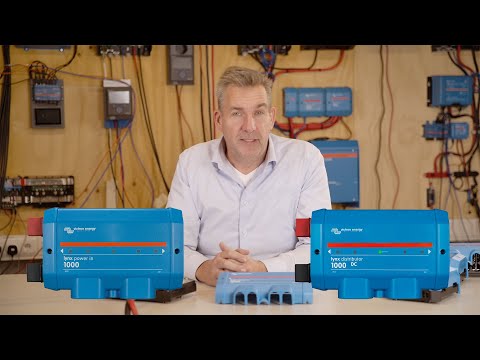
What the Lynx Class-T Power In Does
It’s a busbar module that connects up to two lithium battery strings, each through its own Class-T fuse. It joins the rest of a Lynx system through M10 busbars, so you can add a Lynx Distributor, Lynx Shunt or other Lynx modules beside it.
Specs
| Spec | Lynx Class-T Power In |
|---|---|
| Battery strings | Up to 2 |
| Fuses | 2 Class-T (sold separately) |
| Fuse sizes | 225A, 250A, 350A or 400A |
| Continuous current | 1,000A |
| Voltage | 9-60V |
| Busbar | M10, 8 x 30 mm tinned copper |
| Protection | IP22 |
| Weight | 2.1 kg |
| Dimensions | 170 x 280 x 97 mm |
Source: Victron Lynx Class-T Power In product page.
Why Class-T?
Class-T fuses are widely used directly at lithium batteries because they handle the very high short-circuit current a LiFePO4 bank can deliver. Before this module, people paired a standard Lynx Power In with separate Class-T fuse holders, which meant extra cabling and connections.
Lynx Class-T Power In vs Lynx Power In
The standard Lynx Power In is described by Victron as a modular DC busbar used to connect batteries to the Lynx system. It has no fuses of its own, so battery fusing has to happen elsewhere. The Class-T version builds the fuses into the module, so each string is protected right where it joins the busbar. If you’re starting a new lithium build and want Class-T protection, the Class-T version saves a separate fuse holder per string.
Three or More Strings
Victron says to use multiple modules if you have three or more strings. Each module handles two.
How It Fits a System
A typical van, RV or boat layout looks like this:
- Battery strings, each to its own Class-T fuse in the Lynx Class-T Power In.
- A Lynx Shunt or Lynx Smart BMS for monitoring.
- A Lynx Distributor feeding the inverter, chargers and DC loads.
Check that the fuse sizes match your cable and battery maker’s ratings. Fuses are sold separately.
Who It’s For
- LiFePO4 builds that want Class-T fusing in a tidy busbar.
- Two-string banks.
- Existing Lynx systems.
Good to Know Before You Buy
- Fuses not included.
- IP22, so it belongs in a dry space.
- Two strings per module.
See the Lynx Class-T Power In.
Worked Example: A Two-String RV Bank
An RV with two 12.8V 300Ah LiFePO4 batteries, a MultiPlus-II 12/3000 and a SmartSolar MPPT:
- Each battery connects to its own Class-T fuse in the Lynx Class-T Power In.
- A 400A Class-T fuse per string suits a battery and cable rated for that current. The MultiPlus-II 12/3000 manual itself recommends a 400A DC fuse (example sizing; check your battery maker’s figure).
- If one string is switched off or its fuse blows, the other keeps the RV running at reduced capacity.
- A Lynx Shunt beside the Class-T module measures the combined bank, and a Lynx Distributor feeds the inverter and charger branches.
Choosing the Fuse Size Per String
- Start with the battery maker’s recommended fuse. Many LiFePO4 batteries list a maximum continuous discharge and a recommended Class-T value.
- Check the cable from the battery to the Lynx. The fuse must protect that cable, so it can’t exceed the cable’s ampacity.
- Check the total load. Divide the inverter’s peak battery current across the strings and confirm each fuse handles its share.
- Pick the nearest size from 225A, 250A, 350A or 400A that meets all three.
Worked Example: Current Per String
A MultiPlus-II 12/3000 at its 2,400W continuous rating pulls about 210A from a 12.8V bank (estimate: 2,400W ÷ 12.8V ÷ 0.9). With two equal strings, each carries about 105A, so a 225A or 250A Class-T fuse per string leaves room for the 5,500W peak (estimate). With one string offline, the remaining fuse carries the full current, which is worth checking against your chosen size.
Keeping the Strings Balanced
Two strings share current evenly when their cables are the same length and gauge. Use matching cable runs from each battery to the Class-T module, tighten all lugs to the specified torque, and use batteries of the same model and age.
Building Out the Lynx Chain
- Lynx Class-T Power In: battery strings and Class-T fuses.
- Lynx Shunt VE.Can or Lynx Smart BMS: battery monitoring, plus a main switch on the Smart BMS.
- Lynx Distributor: four MEGA-fused outputs for the inverter, MPPTs, DC-DC chargers and a DC fuse box.
The M10 busbars bolt together, so the chain stays short and the high-current path stays inside the modules.
Installation Tips
- Mount it in a dry, ventilated space, since it’s IP22.
- Allow clearance for the 170 × 280 × 97mm module and the cables that enter it.
- Use the DC ground connection to ground the system as your local code requires.
- Label each fuse with its string and rating.
Pairing It With a Lynx Smart BMS
Victron’s Lynx Smart BMS adds a main contactor and battery management for Victron Lithium Smart batteries, while the NG version serves Lithium NG batteries. Paired with the Class-T Power In, each string gets its own Class-T fuse, and the BMS can switch the whole bank off if a cell goes out of range. It keeps protection, switching and monitoring inside one Lynx chain.
Budgeting the Build
The module, two Class-T fuses, M10 lugs and matching battery cables all need to be on the parts list. Adding the fuses up front avoids a second order once the batteries arrive.
FAQ
Does the Lynx Class-T Power In come with fuses?
No. The two Class-T fuses are sold separately.
What’s the maximum current?
1,000A continuous through the busbar.
Can I connect four battery strings?
Yes, with two modules.
Why use Class-T fuses on lithium batteries?
They have a high interrupt rating, so they can safely break the very large short-circuit current a LiFePO4 bank can deliver.
Can I mix fuse sizes in one module?
Each string should be fused for its own battery and cable. If both strings are identical, use matching fuses.
Does it work with a Lynx Smart BMS NG?
It’s a Lynx module, so it bolts into a Lynx chain alongside other Lynx modules. Follow the module order in the Lynx manuals.
Sources: Lynx Class-T Power In and Lynx Power In product pages, victronenergy.com, accessed Oct 2026.
Related: LiTime 12V 50Ah LiFePO4 Battery Review, XZNY 12V 18Ah LiFePO4 Battery Review, LiTime 12V 20A Lithium Battery Charger Review, plus the Victron Energy Guide