



The cleanest way to power Starlink Mini with Victron gear is straight from your DC system, without an inverter. Starlink’s spec sheet lists the Mini’s input as 12–48V DC, 60W max, with 25–40W average consumption. That means it can run from a 12V house battery directly, or from a Victron Orion converter that supplies a steady higher voltage over long cable runs.
Electrical work can be dangerous: follow the manual, fuse and size every cable correctly, and use a licensed electrician for anything connected to household wiring.
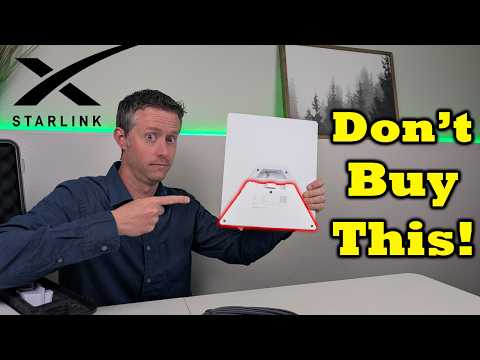
Power Starlink Mini with Victron: Three Options
| Option | How | Pros | Good to Know Before You Buy |
|---|---|---|---|
| 12V direct | Fused 12V feed to a DC barrel cable | Simplest, no conversion loss | Voltage drop on long runs; battery sag near empty |
| Orion-Tr Smart 12/24-15 | 12V in, adjustable 20–30V out | Stable voltage, isolated, works as a power supply | Extra cost, under 100mA no-load draw |
| Inverter + Starlink plug | Phoenix or MultiPlus AC output | Uses the stock power supply | Inverter idle watts add up |
Sources: Starlink Mini specification sheet; Victron Orion-Tr Smart isolated datasheet (output voltage adjustable via Bluetooth; can be used as a power supply).
Daily Energy (Estimate)
At 25–40W average, 24 hours of use is roughly 600–960Wh. On a 12V battery that’s about 50–80Ah per day (estimate: Wh ÷ 12V). Running through an inverter adds its idle draw: a Phoenix 12/1200 lists 11W at no load, or about 264Wh more per day (estimate).
Option 1: 12V Direct
Use a fused feed sized for the cable, keep the run short, and use thick enough wire to limit voltage drop. Commenters on Starlink Mini videos report good results with 12V-to-barrel adapters; see our StarGear 12V to 30V car adapter review.
Option 2: Victron Orion Step-Up
Set the Orion-Tr Smart 12/24-15 output to around 24V in VictronConnect. Higher voltage means lower current in the cable to the dish, so voltage drop matters less.
Option 3: Inverter
Simple if you already run a MultiPlus or Phoenix 24/7, but it’s the least efficient path.
Full specifications for the Orion-Tr Smart are on Victron’s product page.
Inverter option: Victron Phoenix Inverter
Worked Example: Voltage Drop on a 12V Run
Starlink Mini can peak at 60W. At 12V that’s 5A; at 24V it’s 2.5A.
| Run length (round trip) | Cable | Drop at 5A, 12V (estimate) | Drop at 2.5A, 24V (estimate) |
|---|---|---|---|
| 3m | 1.5mm² | ≈ 0.18V | ≈ 0.09V |
| 6m | 1.5mm² | ≈ 0.35V | ≈ 0.18V |
| 10m | 1.5mm² | ≈ 0.59V | ≈ 0.29V |
| 10m | 2.5mm² | ≈ 0.35V | ≈ 0.18V |
Estimates from copper resistance (about 0.0118Ω per metre for 1.5mm²). On 12V, a 0.6V drop on a battery that’s already sagging to 12.2V would leave about 11.6V at the dish, just under the 12V input rating. Stepping up to 24V halves the current and the voltage drop, which is why the Orion option is popular for long runs to a roof or mast.
Worked Example: Energy per Day by Option
For 12 hours of use at an average of 30W (360Wh):
- 12V direct: about 360Wh, or roughly 30Ah from a 12V battery (estimate).
- Orion-Tr Smart at ~88% efficiency: about 410Wh, or roughly 34Ah (estimate).
- Phoenix 12/1200 inverter with the stock power supply: about 360Wh plus 11W × 12h of inverter idle (132Wh), plus power-supply losses, so roughly 520Wh or more (estimate).
Setting Up the Orion-Tr Smart as a Power Supply
- Fuse the 12V input close to the battery.
- In VictronConnect, switch the Orion to power supply mode (not charger mode).
- Set the output voltage, for example 24V, within the 20–30V range.
- Connect the output to a DC barrel cable rated for Starlink Mini, observing polarity.
- Use the remote on/off to switch Starlink off with a panel switch when it isn’t needed.
Sizing Your Battery for Starlink
If Starlink runs 12 hours a day alongside a fridge (about 450Wh) and other small loads (about 300Wh), daily use is roughly 1.1kWh. A 12V 100Ah lithium battery (1,280Wh) would cover about one day without charging; 200Ah gives a comfortable margin (estimate). Solar of 300–400W usually keeps up on sunny days.
Monitoring the Load
A SmartShunt on the house battery shows exactly how many amps Starlink is pulling, so you can see how much the dish uses in your location. Cold weather can raise power use when the dish heats itself to melt snow, so check winter figures separately.
Which Option Should You Choose?
For a short run inside a van, with the dish on the roof directly above the battery, 12V direct with a quality adapter cable is the simplest and most efficient. For a long run to a mast, a boat’s arch or a trailer tongue, the Orion-Tr Smart step-up keeps the voltage steady at the dish. If you already run an inverter all day for other loads, the stock power supply is convenient, but it uses the most energy overall.
Mounting and Cable Tips
- Keep the DC cable away from sharp edges and use a roof gland where it enters the vehicle.
- Use a fuse sized for the cable, close to the power source.
- Label the circuit at the fuse box so it’s easy to find later.
FAQ
Can Starlink Mini run on 12V?
Yes. Starlink lists a 12–48V input rating.
How many watts does Starlink Mini use?
25–40W average, 60W maximum input rating, per Starlink.
Can I use USB-C?
Yes, with Starlink’s USB-C to barrel-jack cable and a USB PD source of at least 100W (20V/5A).
Can I power Starlink Mini from an Orion XS?
The Orion XS is a 12V-to-12V charger; it isn’t designed to step up to 24V. Use the Orion-Tr Smart 12/24-15 for a higher-voltage supply.
Will Starlink Mini drain my starter battery?
Not if it’s wired to the house battery. Keep it off the starter battery circuit, or use the Orion’s remote on/off tied to a switch.
Sources: Starlink Mini specification sheet (starlink.com); Victron Orion-Tr Smart isolated 250–400W datasheet and Phoenix VE.Direct 120V datasheet (victronenergy.com); Jasonoid, “I Found a BETTER Way to Power Starlink Mini!”; ExploreVan UK, “Starlink Mini – Power Options”.
Related: StarGear Starlink Mini 12V to 30V Car Adapter Review, Daiertek Starlink Mini 60W Charger Review, Zitrone Starlink Mini Battery Power Adapter Review, plus the Victron Energy Guide